By plane
One direct flight from Valencia
Cities with a direct flight from Valencia, with their day trips and short breaks. Flight times are approximate.
Day itineraries
There and back in a day

L'Albufera: birds, rice and a boat

Xàtiva: Cova Negra and Gorgo de la Escalera

Xàtiva: castle and baked rice

Chulilla: the Turia's hanging bridges

Chulilla: first climb and castle

Bocairent: caves, rock and olleta

Montanejos: Estrechos and Fuente de los Baños

Montanejos: swimming Chillapájaros and a spa

Villajoyosa: chocolate factory and coloured houses

Villajoyosa: kayaking round the coves and the Valor Museum

Xàbia: kayak, rice and lighthouse

From the Sun through a telescope to Saturn

Peñíscola: film route, castle and boat

Peñíscola: board, rice and boat

Peñíscola: castle, boat and rice

Alcalá del Júcar: canoe, caves and castle

Guadalest and Les Fonts de l'Algar

Elche Palm Grove and arroz con costra

Mudéjar Teruel in a day

Dinópolis and the Torico

Albarracín: cathedral, kid and Rodeno

Cuenca: cathedral, Hanging Houses and San Pablo bridge

Morella: castle and Els Ports cooking
Morella: castle in the morning, zip lines in the afternoon
Overnight itineraries
Overnight from Valencia

A weekend in Bocairent: sunrise balloon, Covetes and the Serra de Mariola

A weekend in Montanejos, an hour from Castellón and Valencia

A night in Xàbia: kayak, an introductory dive and coves beneath the Montgó

A weekend in Peñíscola and the Sierra de Irta, an hour from Castellón

A getaway to Alcalá del Júcar, an hour and three quarters from Valencia
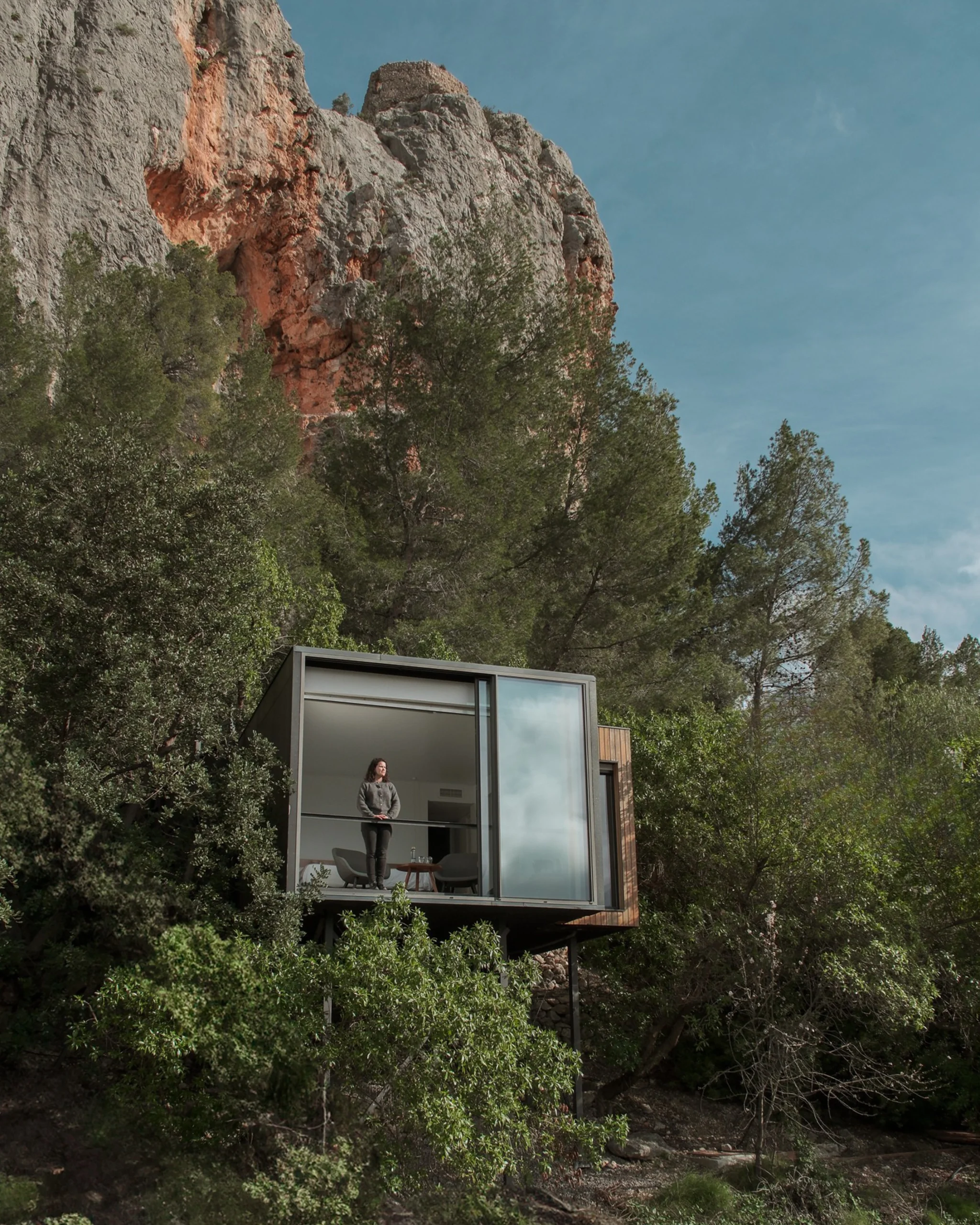 © Vivood1 night
Guadalest for couples: a night in a suite above the valley, with castle, tasting and spa

A weekend in Albarracín and the Rodeno, two hours from Valencia

A getaway to Cuenca and the Ciudad Encantada, two hours from Madrid and Valencia
 Jesús Alenda · CC BY 2.01 night
A night on Tabarca island, an hour from Alicante

A weekend in the Matarraña: Valderrobres, Beceite and the Puertos, under two hours from Zaragoza

A weekend in Cartagena and Calblanque, an hour and a quarter from Alicante

Thermal getaway to Archena and the Ricote Valley, an hour from Alicante

A weekend in Siurana and the Priorat: cliff, reservoir and vineyards

A getaway to Prades: the red town, the forest and a night of stars
To the south, Xàtiva and Bocairent; along the coast, Guadalest
Each motorway leaving Valencia leads to a different landscape. The A-7 to the south reaches Xàtiva in about 48 minutes and, via the CV-40 and Ontinyent, Bocairent. Along the coastal motorway you go down to Benidorm, to Villajoyosa and, via the CV-70, to Guadalest; further south are Elche and Tabarca island. The A-3 to the west leads to Chulilla, in the Turia gorges, and, past Requena, to Alcalá del Júcar and Cuenca.
The A-23 climbs to the north-west: with the CV-195 to Montanejos, and staying on it to Teruel and, via the A-1512, Albarracín. To the north, the coastal motorway passes Castellón on the way to Peñíscola; from there roads climb to Morella and the Matarraña of Valderrobres.
Without a car there are three real exits. The Cercanías C-2 goes from València Nord to Xàtiva in 50 minutes to an hour and ten, with fewer trains on Sunday. The AVE reaches Cuenca-Fernando Zóbel, and from there city bus line 10 and the 1 or 2 go up to the old town. And there is a Renfe train to Teruel, with the station at the foot of the Escalinata.
Xàtiva and Chulilla, an hour or less
Under an hour are Xàtiva, at 50 minutes, with the Seu, the castle and oven-baked rice, and Chulilla, at 60, with the suspension bridges route. These are the Sundays that fit without an early start.
The bulk of the plans are between one and two hours away. Bocairent is 75 minutes away, with the Covetes dels Moros and the bullring excavated in the rock; Montanejos, 80; Villajoyosa, 95, for a chocolate Saturday, because the Valor museum closes on Sunday, and Peñíscola, 100. At 105 minutes there are five exits: Guadalest and Les Fonts de l'Algar, the Huerto del Cura in Elche, canoeing at Alcalá del Júcar, the Mudéjar towers of Teruel and Dinópolis with children. Exactly two hours away, Cuenca and Albarracín.
Between two and three hours the trip calls for a night. Morella is 130 minutes away; Tabarca, at 150, with a boat from the Alicante coast; the Matarraña in two nights, at 159; Cartagena and Calblanque, at 165, and the Archena spa and the Ricote Valley, at 170.
Catalonia is from three and a half hours away: Siurana and the Priorat, at 204 minutes, and Prades, at 211.
Free museums on Sunday in Bocairent and Elche
From October to May is the season for the nearby plans to the south: Xàtiva, with a shuttle to the castle on Sundays; Bocairent and Elche, where several municipal museums are free on Sunday morning. In winter, Archena has the thermal pools included in the stay, Teruel can be visited any Sunday and in Morella it is truffle season.
In spring and autumn you walk. Chulilla calls for arriving before nine to avoid queuing at the bridges; at Guadalest and Les Fonts de l'Algar the pools have no timed slots, and the Rodeno at Albarracín is toured with its cave paintings. The Cuenca gorges are green or yellow.
In summer the river or height are the answer. Xàtiva, Chulilla and Bocairent are not recommended in July and August. Canoeing on the Júcar is, as is Montanejos with a ticket bought for the Fuente de los Baños, which has a capacity limit, and Teruel, cooler, although in July, on the big days of the Vaquilla, the Lovers' Mausoleum closes.
Cercanías C-2 to Xàtiva and rice in the Plaça del Mercat
- Without a car, in a day: Xàtiva, the Seu, the castle and oven-baked rice. Cercanías C-2 from València Nord around 9:00, the Seu and the museum in the morning, rice in the Plaça del Mercat and the castle in the afternoon.
- With one night: Cuenca and the Ciudad Encantada. Two hours along the A-3 or by AVE: the old town on Saturday, the night facing the Casas Colgadas and the Ciudad Encantada on Sunday.
- With two nights: Albarracín and the Rodeno. Two hours along the A-23, the old town with a guide, legends at dusk, the Rodeno paintings and an afternoon on horseback.