

Plaza Mayor and Arco de la Estrella
30 minEveryoneDog-friendlyAll year
Walk · 30 min · Free · The entrance to the monumental city through the wall's arch
39.47° N · 6.37° W
What to see in the monumental city of Cáceres: Plaza Mayor, Bujaco, Santa María, the Golfines and the cistern, how to get there from Mérida or Salamanca and where to eat and sleep.
Part of Game of Thrones Locations
What to do
Each plan says how long it takes, who it's for and whether you can book.
Walk · 30 min · Free · The entrance to the monumental city through the wall's arch

Visit · 30 min · The main church of the monumental city, in a square surrounded by palaces

Museum · 1 h · Free for EU citizens · Veletas Palace and cistern closed for works since July 2025; call first


Itineraries
Days and weekends already planned out, with how to get between each stop and who to book with.
Getaways from Cáceres
Plan the trip
Each choice narrows the next: the season shapes how best to travel, and how you travel decides where you stay and where you eat.
When to go
In spring and autumn. November brings the Mercado de las Tres Culturas. In July and August, midday is very hot: the monumental city is best enjoyed first thing and at night.
How you travel
Choose how you're travelling and we'll tell you where to stay, how to get around, where to eat and which services you'll need. We only show the ways of travelling that make sense here.
Cáceres is on the A-66 and the A-58: an hour from Mérida, an hour and a half from Badajoz and under two and a half hours from Salamanca. The monumental city is a restricted-traffic zone, so the car is left outside and you walk inside. The car is useful for using Cáceres as a base for Trujillo, 40 minutes away, or Monfragüe, an hour away.
The Renfe train reaches Cáceres from Mérida, Badajoz and Madrid, and the train and bus stations are together, about 2 km from the Plaza Mayor. From there, everything that matters fits into a walk through the monumental city.
Cáceres has one of the few three-Michelin-star restaurants in Spain inside a five-star hotel. A luxury weekend here is organised around that table, with the monumental city empty at night as you leave.
Who you're with
A trip with a toddler is not the same as one with a teenager. Pick yours to see what works and what to bear in mind.
The monumental city of Cáceres is compact, car-free and full of towers, arches and staircases: to children it feels like a film set. The hard part is the cobbled slopes with a pushchair.
Where to stay
We show you what suits the way you travel.Change how you travel

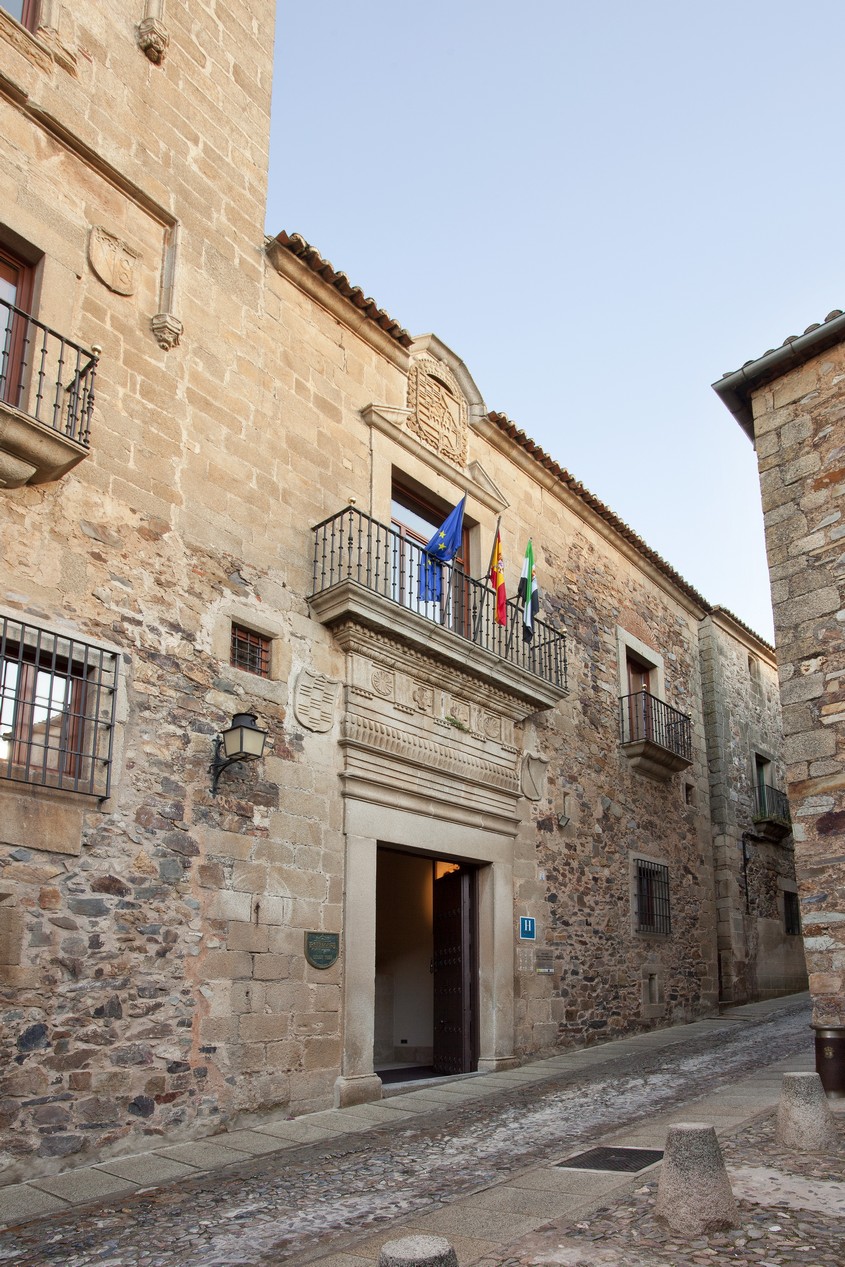
Why we like it: A five-star hotel with fourteen rooms on Plaza de San Mateo, designed by Tuñón and Mansilla, with the three-Michelin-star restaurant, pools and a wine cellar.
 © ParadoresHotel
Why we like it: Parador in two Gothic palaces on Calle Ancha, inside the walled enclosure, with its own tower, garden and Extremaduran restaurant.

Why we like it: Restored 19th-century manor house with eight rooms and a courtyard, 150 metres from the Plaza Mayor. Pets accepted on request.
Services for this trip
Areas, for any way of travelling
| Area | Who it's for | Average night |
|---|---|---|
| Plaza Mayor | Restaurants, tourist office and the entrance through the Arco de la Estrella | |
| Monumental city | Palaces, the parador and Atrio, without cars | |
| Centre, calle General Margallo | Accommodation five minutes' walk away, easier for parking |
Where to eat
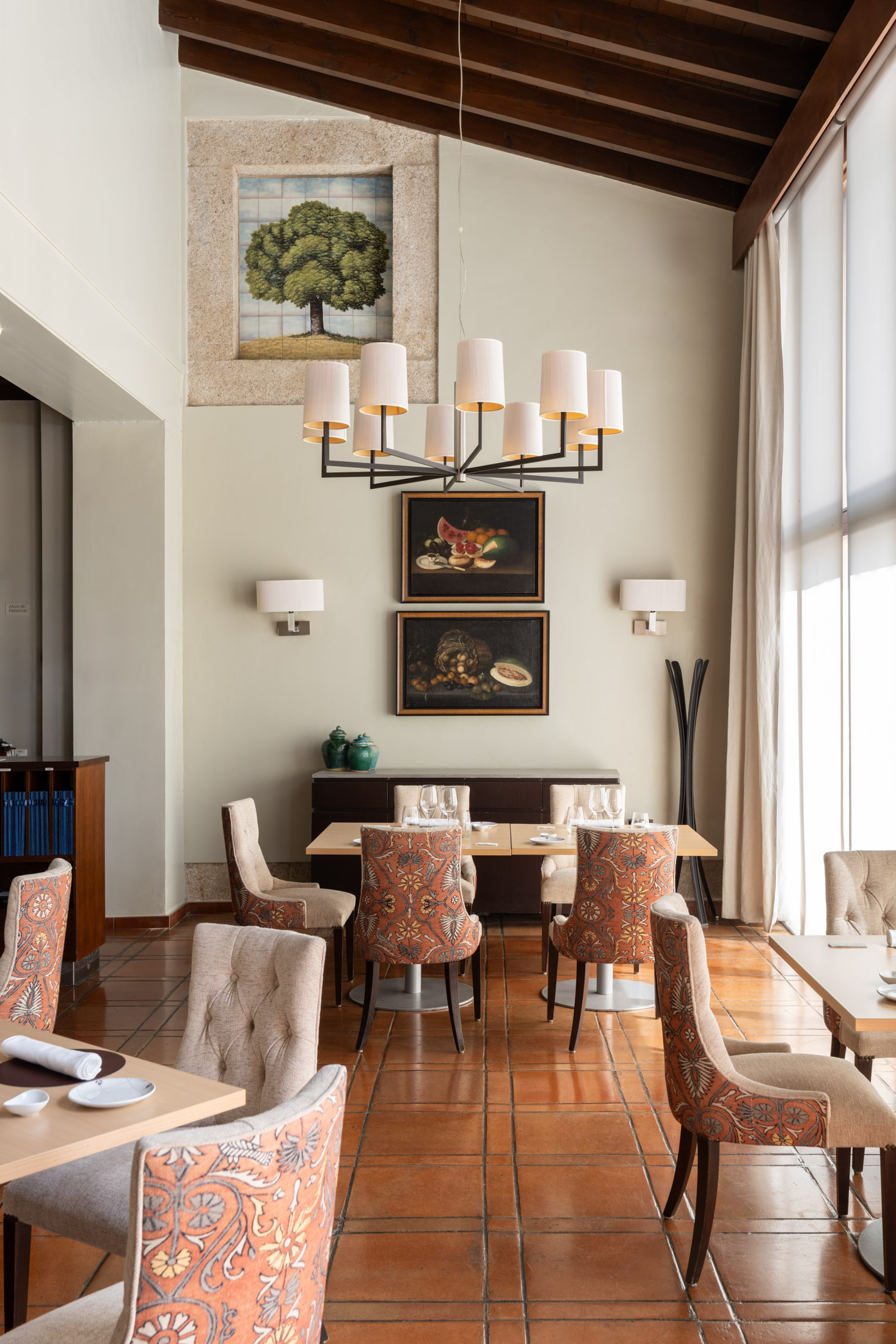
From set lunch menus to Michelin stars. We mark the price level and what to order at each place.
 © Paradores
What to order: Extremaduran zorongollo and Iberian sirloin with Casar cheese sauce; técula mécula for dessert

What to order: the €57 tasting menu for the whole table, or charcoal-grilled Iberian cuts and a stew such as the tripe and pig's snout; in good weather, a table outside

What to order: the regional menu: Extremaduran migas or the house soup, and for the main chanfaina, venison stewed with mushrooms or Iberian beef cheek
Map
The places to stay and services on the map are the ones for the way you travel. Turn on the layers you want and tap a point to see its details.
Nearby
The closest places, whichever country they are in.

39.46° N · 5.88° W
By carCar-freeLuxury

39.85° N · 6.03° W
By carOn foot

38.92° N · 6.34° W
By carCar-free

39.39° N · 7.38° W
By carBy motorbikeBy plane
Tips
The monumental city lit up and empty is the best of Cáceres.
The visits are for small groups and at fixed times.
The cobbles are slippery, especially going downhill.
Sleep inside the walls or very close. Going out to dinner and walking back along the stone streets is the experience.
Driving into the monumental city without a reservation at the parador: it is a restricted-traffic zone.
Cáceres keeps within its walls an almost complete medieval and Renaissance city: stone streets without cars, fortified houses with coats of arms, towers, palaces and churches, all in a few hectares on a hill. The monumental city has been a World Heritage Site since 1986, and in 2026 it marks forty years since the declaration. Below, the Plaza Mayor acts as a hinge with the new town. It can be seen in a day, but at night, lit up and silent, is where it truly surprises.
By car, from Mérida it is about 75 km on the A-66, under an hour. From Badajoz, about 90 km, a good hour and a half. From Salamanca, about 200 km on the A-66, around two hours twenty. From Madrid, about 300 km on the A-5 and the A-58 via Trujillo, a little over three hours.
By train, Renfe Media Distancia arrives from Mérida, Badajoz and Madrid. The train and bus stations are together, south of the centre, about 2 km from the Plaza Mayor: half an hour on foot or a taxi.
Outside the walls. The monumental city is a restricted-traffic zone and its streets are not for cars: park in the centre, for example in the Obispo Galarza car park, and walk up. If you sleep at the parador you can drive in, but follow its instructions: enter by calle San Ildefonso and register your number plate at reception.
Start in the Plaza Mayor, where the tourist office is. Climb the Torre de Bujaco, for €2.50, to see the square from above, and enter the monumental city through the Arco de la Estrella. You soon reach the plaza de Santa María, with the co-cathedral surrounded by palaces.
Continue to the plaza de los Golfines: the palacio de los Golfines de Abajo is visited inside with a guide, in small groups and at fixed times, for €3. It is the way to see how a noble family of the city lived, with its Armoury and its archive. A step away is the plaza de San Jorge, with the staircase of San Francisco Javier. Higher up, in the plaza de las Veletas, the Museo de Cáceres holds an Arab cistern beneath the house; it is free for EU citizens.
In the afternoon, the Museo Helga de Alvear, of contemporary art and free, or an aimless stroll along the streets of the upper part. Come back at nightfall: with the stone lit up and almost no people, it is another city.
If you prefer to be told about it, the full tour by Activa Tours does the route in two and a half hours with an official guide, four admissions and a tasting, for €19.50. It leaves from the Plaza Mayor.
Inside the walls, the Parador restaurant is open every day with Extremaduran cooking. Torre de Sande, Atrio's eating house, has a garden at the foot of an ivy-covered tower. Next to the monumental city, El Figón de Eustaquio, open since 1947, has a regional menu of migas, chanfaina and venison. For a big occasion, Atrio, with three Michelin stars.
A day for the essentials. With a night, you see the city lit up and visit the Golfines and the museums at leisure. With two, Cáceres is a base for Trujillo, 40 minutes away, for the Monfragüe National Park, an hour away, or for Mérida, an hour away on the A-66.
In spring and autumn, when it is pleasant to walk at any hour. In mid-November, the Mercado Medieval de las Tres Culturas fills the city with stalls and shows, with light and sound over the Torre de Bujaco; some museums close on those days. July and August are very hot: leave the visit for the morning and the night.
Questions
The Plaza Mayor and the Torre de Bujaco, the Arco de la Estrella, the Santa María co-cathedral, the palacio de los Golfines de Abajo, the plaza de San Jorge and the Museo de Cáceres with its cistern.
Under an hour by car on the A-66. There is also a Renfe train.
Outside the walls, in the centre, and walk up. The monumental city is a restricted-traffic zone.
No. The streets are free; you pay at the Torre de Bujaco, the co-cathedral and some palaces.
Yes. The Torre de Bujaco, the cistern and the Golfines family visit appeal to them. With a pushchair, the slopes are hard going.
In November. In 2026, from the 12th to the 15th.
Geocaliahttps://www.geocalia.com/en/spain/extremadura/caceres


