By plane
One direct flight from Alicante
Cities with a direct flight from Alicante, with their day trips and short breaks. Flight times are approximate.
Day itineraries
There and back in a day

Elche Palm Grove and arroz con costra

Camp d'Elx: Ilici, Puçol and a winery

Villajoyosa: chocolate factory and coloured houses

Villajoyosa: kayaking round the coves and the Valor Museum

Tabarca by short boat from Santa Pola

Guadalest and Les Fonts de l'Algar

Bocairent: caves, rock and olleta

Tabarca by boat from Alicante

Xàbia: kayak, rice and lighthouse

Archena hot springs and Ricote

Xàtiva: Cova Negra and Gorgo de la Escalera

Cartagena: theatre, castle and boat

Xàtiva: castle and baked rice

Calblanque: unspoilt beach and caldero

Rafting from Cieza to Blanca

Caravaca de la Cruz on a Sunday

L'Albufera: birds, rice and a boat

Alcalá del Júcar: canoe, caves and castle
Overnight itineraries
Overnight from Alicante
 © Vivood1 night
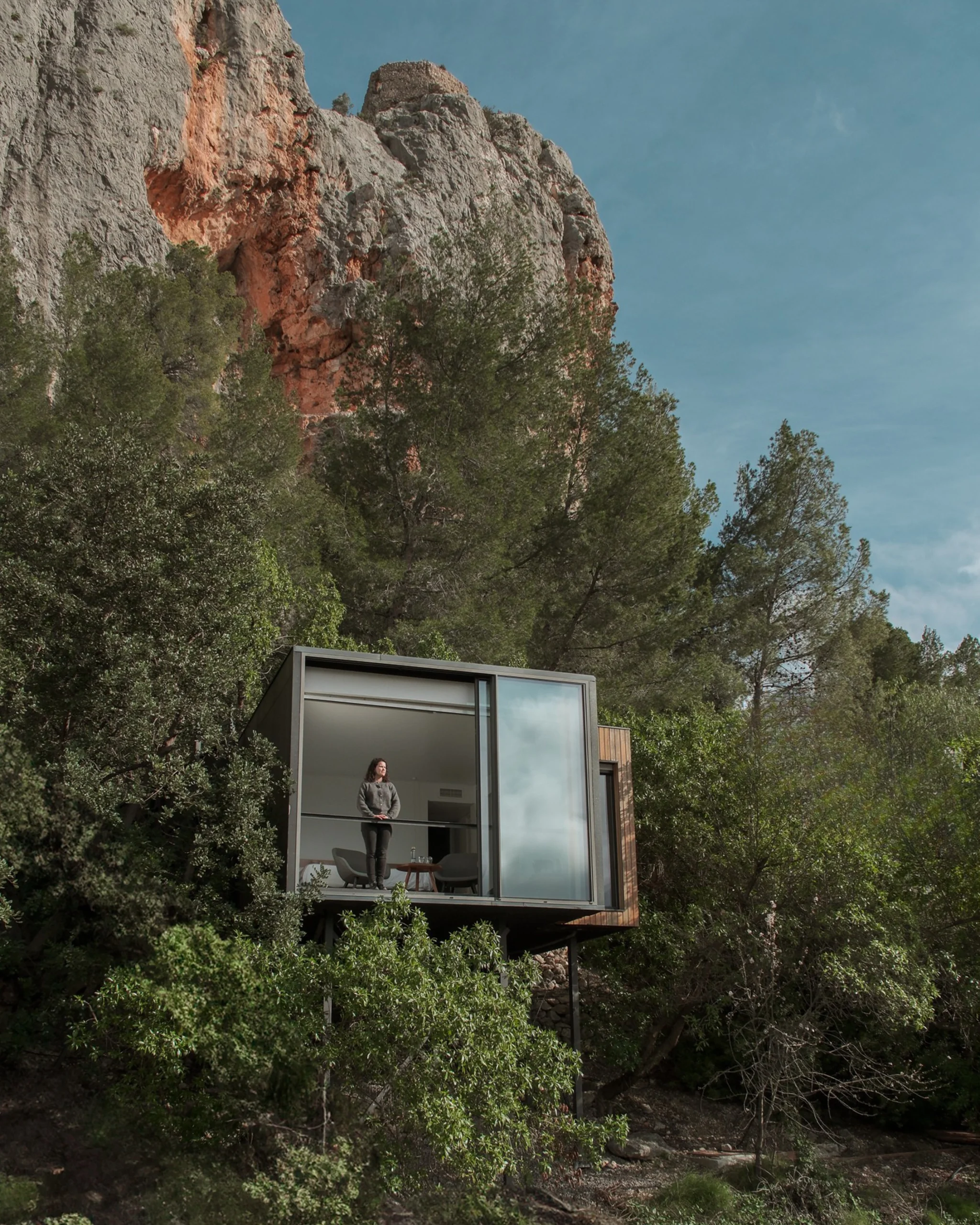
Guadalest for couples: a night in a suite above the valley, with castle, tasting and spa

A weekend in Bocairent: sunrise balloon, Covetes and the Serra de Mariola
 Jesús Alenda · CC BY 2.01 night
A night on Tabarca island, an hour from Alicante

A night in Xàbia: kayak, an introductory dive and coves beneath the Montgó

A weekend in Cartagena and Calblanque, an hour and a quarter from Alicante

Thermal getaway to Archena and the Ricote Valley, an hour from Alicante

A getaway to Alcalá del Júcar, an hour and three quarters from Valencia

A weekend in Cabo de Gata, 40 minutes from Almería

A weekend in Albarracín and the Rodeno, two hours from Valencia
North or south along the coast, and by boat to Tabarca
Almost everything around Alicante leaves by the A-7 and the AP-7, towards one side of the coast or the other. To the north, the Benidorm motorway leads to Villajoyosa and, via the CV-70, La Nucia and Polop, to Guadalest, about 65 km. To the south, the A-7 passes through Elche and continues towards Murcia: with the A-30 you climb to the Ricote Valley and descend to Cartagena and Calblanque. Inland, towards Alcoi or Villena, is Bocairent, and further north, already on the way to Valencia, Xàtiva. The A-31 towards Albacete is the exit to La Mancha and to Alcalá del Júcar.
Without a car there are two exits that work. TRAM line 1 leaves Luceros and stops at La Vila Joiosa, with the old town and the chocolate museum on foot. And from the harbour the boat leaves for Tabarca island, an hour's crossing; if you prefer a shorter boat, the one from Santa Pola takes about 15 minutes. For the rest, a car.
Long mornings in Elche, Villajoyosa and Guadalest
Under an hour fit the long-morning plans: Elche, at 25 minutes, with the Huerto del Cura and arroz con costra; Villajoyosa, at 30; Tabarca via Santa Pola, at 45, and Guadalest, at 50, with the castle on the rock and the afternoon in the pools of Les Fonts de l'Algar.
Between one and one and a half hours is the bulk of the Sundays. Bocairent and Tabarca by boat from the harbour, at an hour; Xàtiva, Cartagena and the Archena Spa, at an hour and a quarter; Calblanque, at 80 minutes, and rafting on the Segura, from Cieza to Blanca, at 85.
Beyond that, between an hour and a half and two and a quarter hours, the day gets tight: Caravaca de la Cruz, at 100 minutes, and Alcalá del Júcar, a little over two hours, which can be done in a day with canoe, caves and castle or with a night facing the illuminated village.
From almost three hours, the trip calls for two nights: Cabo de Gata, at 175 minutes, and Albarracín and the Rodeno, at almost four hours. At that distance too are Chulilla, with its suspension bridges over the Turia, and Riópar, where the Río Mundo emerges from the mountain in the Sierra del Segura.
The Elche palm grove, best from October to May
In winter, hot water is close: the thermal Sunday at Archena with lunch at Ricote or, with two nights, the thermal getaway to the spa, both best from October to April.
From October to May is the season for Elche and its palm grove, the Seu and castle of Xàtiva and Bocairent with its Covetes dels Moros. Xàtiva and Bocairent are not recommended in July and August, nor Elche in July. In spring and early autumn Guadalest and Les Fonts de l'Algar and the undeveloped beaches of Calblanque with a caldero at Cabo de Palos are at their peak.
For the sea, Tabarca with snorkelling and a caldero goes better from April to June and in September and October; the short boat from Santa Pola runs from May to October, and out of season Santa Pola has more boats than Alicante. In high summer, the Segura by raft is the way to get through the heat without a beach.
A chocolate Saturday in Villajoyosa
- Without a car, in a day: the chocolate Saturday in Villajoyosa. TRAM from Luceros, almuerzo at the Mercat, the Valor museum with a tasting, the coloured houses from the beach and rice by the harbour. On a Saturday, because the museum closes on Sunday.
- With one night: Tabarca when the boats leave. An hour by boat, snorkelling and a caldero, the island empty at sunset and stars at Punta Falcón.
- With two nights: Cartagena and Calblanque. An hour and a quarter along the A-7, for the Roman theatre and the harbour by boat on Saturday and the unspoilt beaches on Sunday.