What to do · Cuenca
Cathedral of Santa María and San Julián
Information
- From
- €5 per person
- Duration
- 1 h
- Season
- All year
- Who it's for
- Everyone
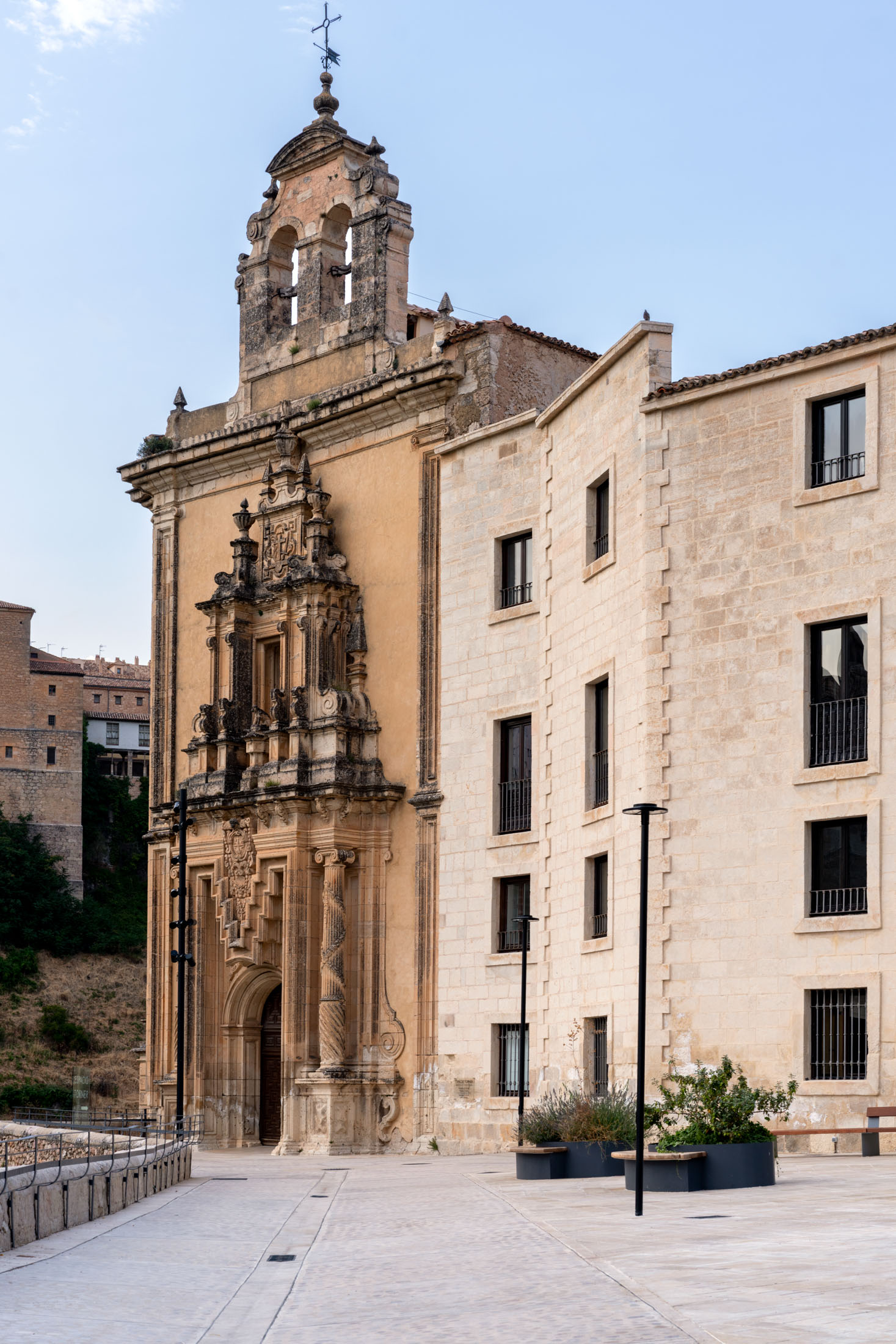
The cathedral of Santa María and San Julián presides over Cuenca's Plaza Mayor and is the city's most important monument. Construction began at the end of the 12th century, after the Christian conquest, and its core took shape in the 13th century. Since then, each century added something: the naves up to the façade are 14th century, the ambulatory was rebuilt in the 16th and the façade you see today, neo-Gothic, is 20th century, the work of Vicente Lampérez.
What to see inside
Of the original Gothic, the rib vaulting and, above all, the triforium, the gallery that runs round the church above the arches, remain. The chapels in the side aisles date from the 16th and 17th centuries; the tourist office highlights those of the Apostles, the Holy Spirit and the Knights, as well as the Sacristy and the Chapter House. Almost all are closed off with wrought-iron grilles made in Cuenca's workshops, and the three that close the Main Chapel are among the best in Spanish churches.
In the centre is the choir, of carved wood, and facing it the neoclassical altar by Ventura Rodríguez, with a transparente that lets you see, behind it, the silver casket with the remains of San Julián. Do not miss the Arco de Jamete, through which you pass to the cloister and which specialists count among the best of the building, nor the stained glass, almost all 20th century, which tints the light with colour depending on the hour.
Tickets and hours
General admission costs €5.50 and includes an audio guide. The Treasury Museum is separate, at €4. On the official sales website there is also a visit to the church of San Pedro and its tower, and a combined ticket with the cathedral, the triforium, the museum and San Pedro. Reductions can be checked at the ticket desk. Some autumn evenings there is a guided night visit, lasting an hour, and on certain Fridays you can visit the cathedral archive with its archivist, always with limited places.
According to the tourist office's winter timetable, the cathedral is open Sunday to Friday from 10:00 to 17:30, and Saturdays and public holidays from 10:00 to 19:30. It may change because of ceremonies or events, so if you go on a special day, confirm beforehand. Allow an hour for the cathedral and half an hour more if you add the museum.
The Treasury Museum
It is a step away, on the ground floor of the Bishop's Palace, on Calle Obispo Valero. It brings together eight centuries of the diocese's history: Flemish tapestries, goldwork and carpets, two paintings by El Greco, "The Agony in the Garden" and "Christ Carrying the Cross", a room devoted to Juan de Borgoña and a 14th-century Byzantine diptych, the reliquary icon of the Despots of Epirus. The display was designed by the artist Gustavo Torner in 1983.
How to combine it
From the cathedral you walk down in two minutes along Calle Canónigos to the Hanging Houses and the Abstract Art Museum, and from there to the San Pablo bridge. If it is a Sunday morning, the Antonio Pérez Foundation is free and very close.