What to do · Santillana del Mar and Altamira
A walk through the town of Santillana del Mar
Information
- Price
- Free
- Duration
- 1 h 30
- Season
- All year
- Who it's for
- All ages; the cobbles are awkward with a pushchair
- With a dog
- On a lead in the streets
What it is
Santillana del Mar is a medieval and Baroque town of nobles' manor houses, coats of arms and wooden balconies, without a single building out of place. It grew around the monastery of Santa Juliana, and in the 15th and 16th centuries it was the capital of the Asturias de Santillana, with great influence at court. Having no port, it gradually lost weight, and when in the 18th century a new road diverted traffic to Castile via Torrelavega, it was left aside. Thanks to that it was preserved as it was: according to the Cantabrian Government, its historic centre has no buildings later than the 18th century and has been protected since the late 19th. You walk it in an hour and a half.
Where to park
Traffic inside the historic centre is restricted to residents, so the car stays outside. There are two public car parks beside the entrances: the one in Plaza del Rey, entering from the CA-133, and Rolaceña, beside the tourist office, entering from the CA-131. The whole historic centre keeps its traditional cobbles: wear comfortable shoes and forget high heels. With a pushchair it is possible, but awkward.
The route
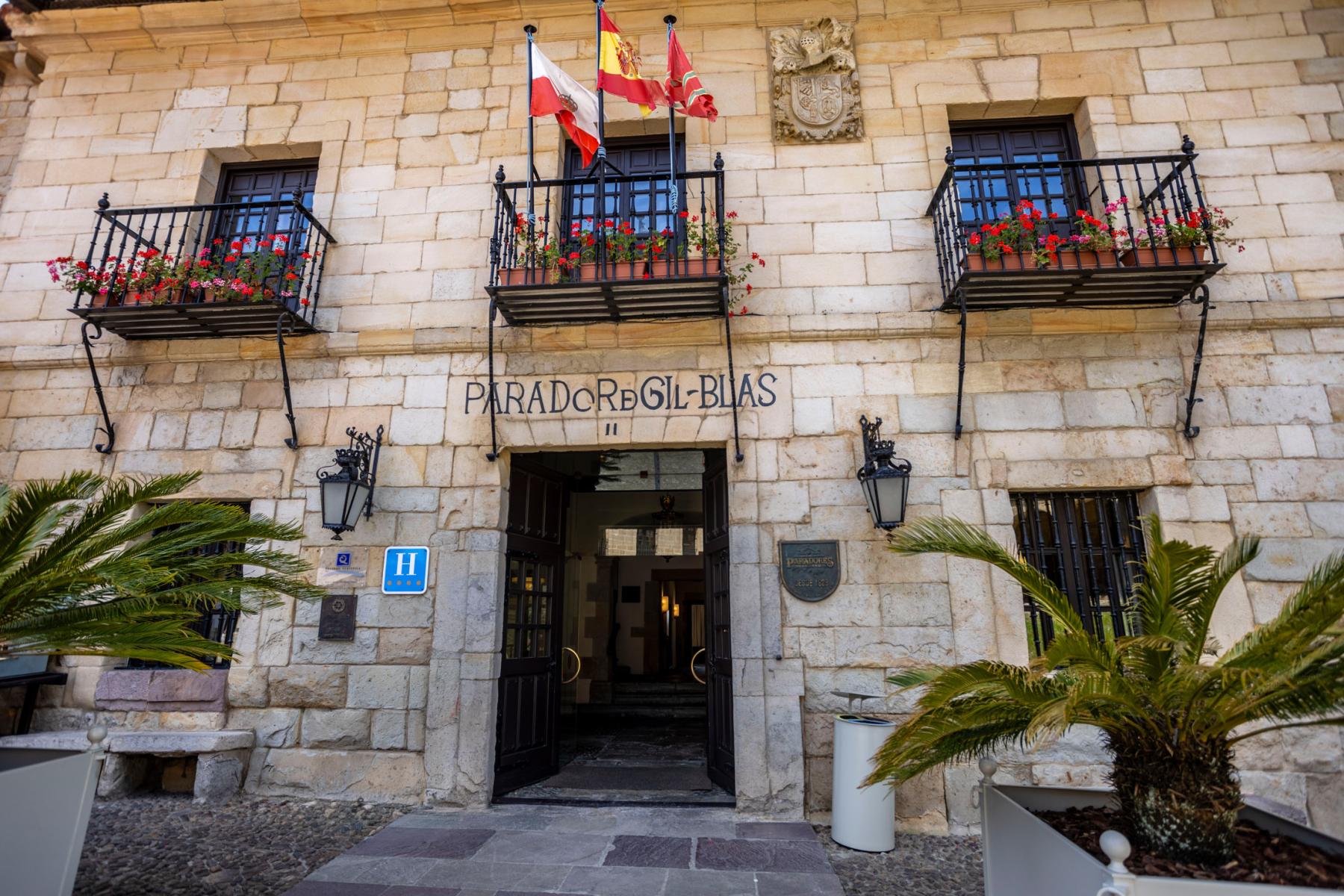
Start along calle de Juan Infante, which leads into the historic centre. Soon you reach a fork: on the right, calle de la Carrera runs straight down to the collegiate church; continuing straight on, you reach Plaza Mayor, Ramón Pelayo's, which represents civil power. It is presided over by the Merino tower, the authority appointed by the king, and flanked by the Don Borja tower, the Águila and Parra houses, the Barreda-Bracho house and the town hall. The 17th-century Baroque manor house on the square is today the Parador Gil Blas. From there, along calle de Las Lindas, you pass into calle del Cantón, the shopping street, where the house of the Marqués de Santillana stands.
Then go down calle del Río, with its fountain and drinking trough, to Plaza de las Arenas and the Collegiate Church of Santa Juliana, at the far end. Notice the contrast between the sobriety of the late Gothic and Renaissance houses and the great Baroque coats of arms that families put up to show off.
When
First thing or in the late afternoon: by mid-morning in August the main street fills up. In winter the town is quiet and open. On 5 January the Three Kings parade sets out with characters in period dress, a festival of national tourist interest. The Águila and Parra houses host temporary exhibitions and close on Mondays.
What to taste and what to combine
The typical thing in Santillana is an afternoon snack of milk with sponge cake, which is made here in the traditional way, or sobaos pasiegos and quesada. On the outskirts you have the Altamira Museum and its neocave and, ten minutes' walk away, the zoo. The tourist office is at calle Jesús Otero 20, on 942 818 251.
With young childrenAs a familyWith a dog