Guided visit to the telescopes of the Roque de los Muchachos Observatory
Guided visit · 1 h 50 · April to November, by day · From age 6 · From €15
28.68° N · 17.85° W
The world's first Starlight Reserve: telescopes at the Roque de los Muchachos from the inside, guided stargazing and astronomical viewpoints all over the island.
Part of Starry skies in Spain
What to do
Each plan says how long it takes, who it's for and whether you can book.

Guided visit · 1 h 50 · April to November, by day · From age 6 · From €15

Astronomy · 2 h of sky, 3 h 30 with travel · From age 4 · From €25

Astronomy museum at 2,426 m · 45 min · Every day · €15, free up to age 12
Itineraries
Days and weekends already planned out, with how to get between each stop and who to book with.
Plan the trip
Each choice narrows the next: the season shapes how best to travel, and how you travel decides where you stay and where you eat.
When to go
Telescope visits run from April to November: the IAC suspends them from December to March. The stars can be seen all year; choose nights without a Moon and bring a jacket, because on the summit it freezes in winter.
Where to stay
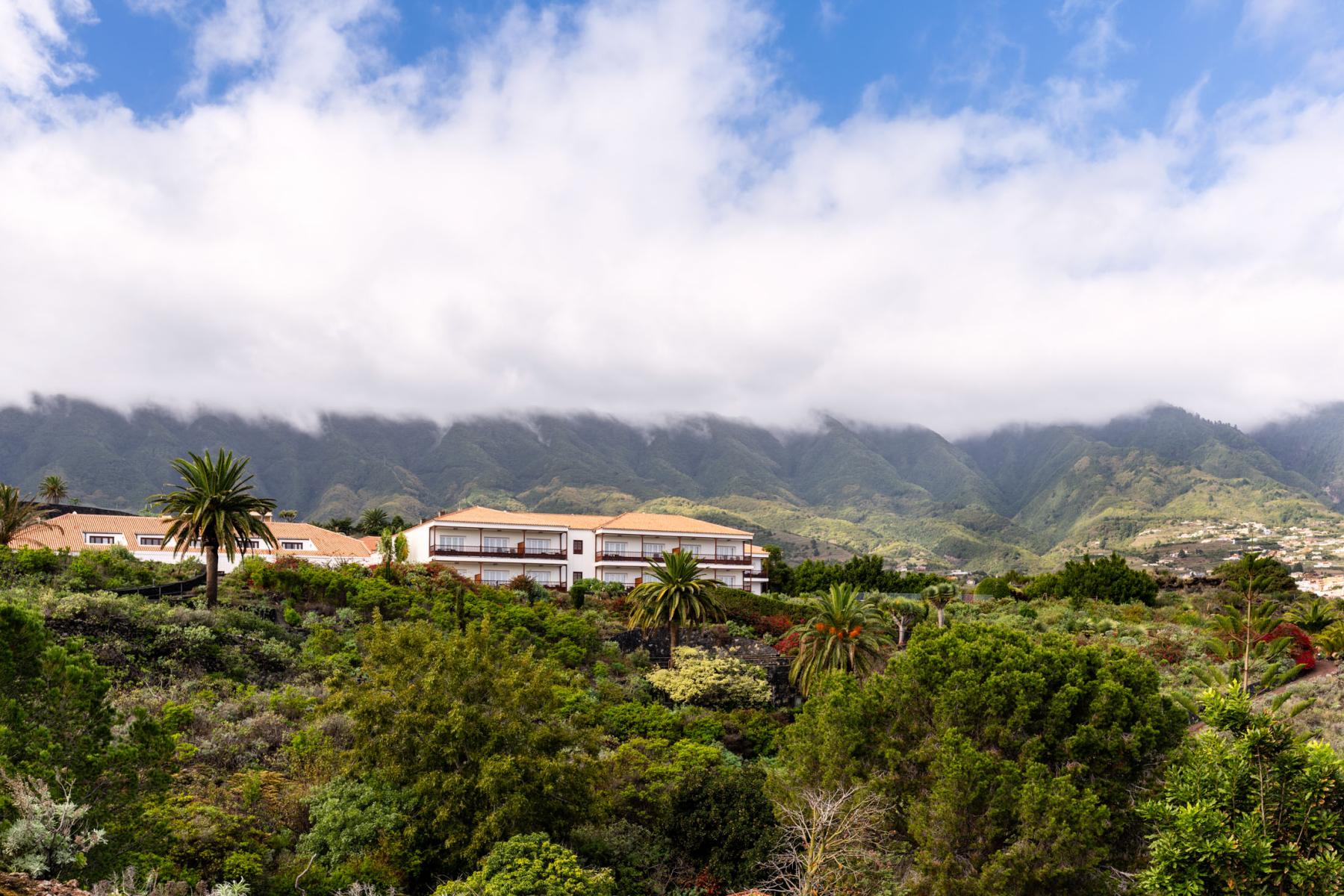
© Paradores de TurismoHotelWhy we like it: Parador in Canarian architecture with a 44,000 m² garden and a pool over the Atlantic, 5 km from the airport and 4 km from Los Cancajos, where the stargazing nights leave from.

Why we like it: A country house over a hundred years old among the vineyards of Breña Baja, with sea views and equipped for stargazing; 8 minutes from Los Cancajos.
Services for this trip
Areas, for any way of travelling
| Area | Who it's for | Average night |
|---|---|---|
| Los Cancajos and Breña Baja | Next to the airport; the observations leave from here | |
| Santa Cruz de La Palma | The capital, 40 km of road from the Roque | |
| El Paso and Los Llanos | The western valley, with the Caldera and Llano del Jable |
Where to eat
From set lunch menus to Michelin stars. We mark the price level and what to order at each place.

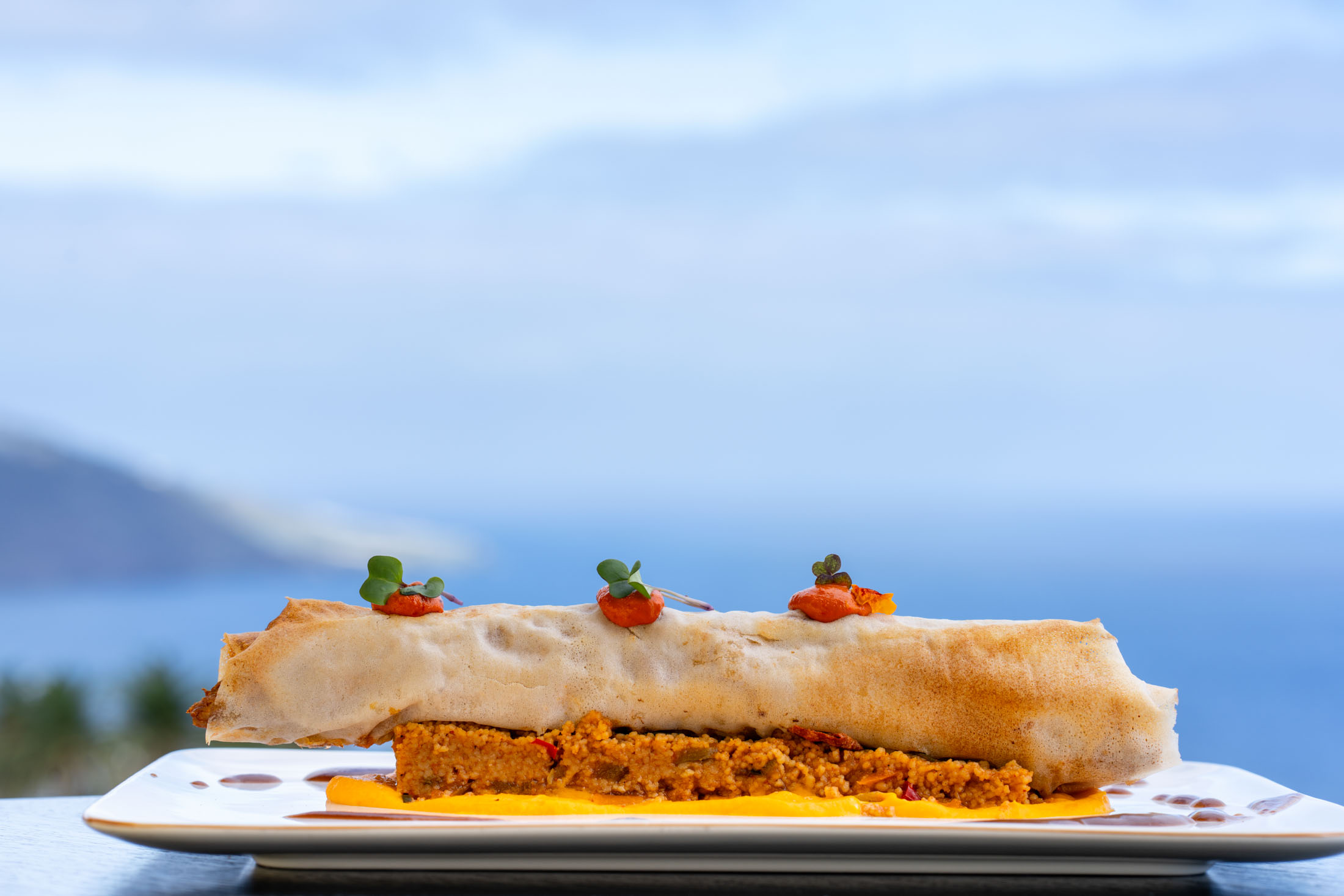
What to order: the confit potatoes stuffed with rabbit in salmorejo, the fish of the day and the Palmero cheese board
© Paradores de TurismoWhat to order: watercress or chickpea stew and the boiled fish of the day with mojo
Map
Turn on the layers you want and tap a point to see its details.
Nearby
The closest places, whichever country they are in.
Tips
On many afternoons the sea of clouds covers the coast and leaves the summit clear. From Los Cancajos it can look cloudy and be perfect up above: that is why the companies decide the viewpoint at the last minute.
Visit the observatory in the morning, come down via the Caldera and go back to the summit or to Llano del Jable at night. With the Ad Astra ticket, the visitor centre costs you half price for a week.
Next to the observatory there are no cafés or restaurants: only drinks machines at the visitor centre.
It is more than 40 km of mountain bends from the coast, sometimes with fog when crossing the sea of clouds, and up there there is no petrol station or services. For your first night, better with a guide or at Llano del Jable, at mid-altitude.
Because here it is protected by law. At the summit of the island, at about 2,400 m and above the sea of clouds, stands the Roque de los Muchachos Observatory, one of the great observatories of the world. So that its telescopes can keep seeing, a law has protected the astronomical quality of the island's sky since 1988 from light pollution, and also from radio-electric interference and certain flight paths. It is what the island calls the Sky Law, and you notice it as soon as you leave a village at night.
The Cabildo sums it up in three dates: in 2007 the Declaration in Defence of the Night Sky was signed on the island, La Palma was the world's first Starlight Reserve and in 2012 it also received the title of Starlight Tourist Destination. For visitors, that translates into three ways of looking at the sky: the professional telescopes by day, guided observations with a telescope at night, and a network of astronomical viewpoints spread around the island, with panels so you can find your way around the sky on your own.
In two ways. The first, with no booking: the Roque Visitor Centre, at 2,426 m, opens every day and explains in three rooms why the Canary Islands are a window on the universe; you see it in about 45 minutes and it costs €15, free up to age 12.
The second is to go inside a telescope. The guided visits to the observatory are run by accredited Starlight guides, by day, in small groups and with a reservation on each company's website. They last a good hour and a half and, depending on which telescope is free that day, you might get the Gran Telescopio Canarias, the MAGIC telescopes or the new CTAO telescopes. The IAC suspends them from December to March, both included, because of the weather. At night you don't go in: the telescopes are working.
With a guide, the simplest way is a telescope observation that leaves from Los Cancajos and goes up to a mountain viewpoint chosen according to that night's clouds. It is about two hours of looking and three and a half or four with the journey. If you bring a camera and tripod, there is also a night photography tour in groups of six at most.
On your own, the Llano del Jable astronomical viewpoint, on the summit of El Paso, at 1,341 m, is the easiest to reach by car from the valley or from Breña Baja. The highest and darkest are next to the Roque, above 2,100 m, but the road at night is long and narrow.
From April to November you can combine telescopes by day and stars by night. For the Milky Way, look for nights with no Moon or with the Moon already set; with a full moon the Moon itself and the planets are seen well, but the deep sky fades. At the Roque it is cold all year as soon as the sun sets: AstroLaPalma speaks of 12 to 15 °C in summer and 2 to 6 °C in winter, and on the summit path there can be ice.
Fly into La Palma airport (SPC), three minutes from Los Cancajos, and rent a car: no guagua goes up to the Roque. From Santa Cruz de La Palma it is about 40 km of mountain road along the LP-4; there is no petrol station up there, so go up with at least half a tank.
Questions
Yes, by day and with a reservation, with authorised Starlight guides, from April to November. The visitor centre opens all year without booking except on 24, 25 and 31 December and 1 January.
With AstroLaPalma, €35 from age 12 and €25 for ages 4 to 11 without transport, or €55 with transport. The telescope visit with Ad Astra costs €20.
Yes. No public transport goes up to the Roque; observatory visits start in the visitor centre car park and only some night observations include transport.
To the telescopes, from age 6 and with an adult. To AstroLaPalma's stargazing, with a children's rate from 4. The visitor centre is free up to age 12.
Two nights: one day of observatory and stars and another for the Caldera de Taburiente or the volcanic south. With three, you can repeat the sky if one night turns out cloudy.
Geocaliahttps://www.geocalia.com/en/spain/canary-islands/la-palma